

Atlanta, a cradle of the Civil Rights Movement, has been a historic hub for Black entrepreneurship, higher education, and political activism. Once known as a “Black Mecca,” the city has experienced demographic changes since its inception in 1837. The metro area’s Black population grew fivefold since 1970 to 2.3 million, now ranking second nationally after New York. The city has seen significant shifts in the racial composition of its neighborhoods over the years, with some areas experiencing gentrification and a decrease in Black population. Black neighborhoods and racial equality in the featured “Black Neighborhoods and the Creation of Black Atlanta” exhibit and the “Mapping Inequality” visualization project below.
While demographic shifts have transformed neighborhoods, Atlanta remains a vital hub of Black political, cultural, and intellectual life. Black communities form the vibrant heart of metro Atlanta – from multigenerational African American families whose roots stretch back to the Civil Rights era, to more recent immigrants bringing Caribbean rhythms and African traditions to the city’s bustling neighborhoods. This legacy is preserved in projects like the Our Story digital exhibit, which showcases how Atlanta University Center institutions nurtured Black excellence in theater, dance, and scholarship.
Featured Project | Digital Projects | Articles | Further Reading | Teaching Materials
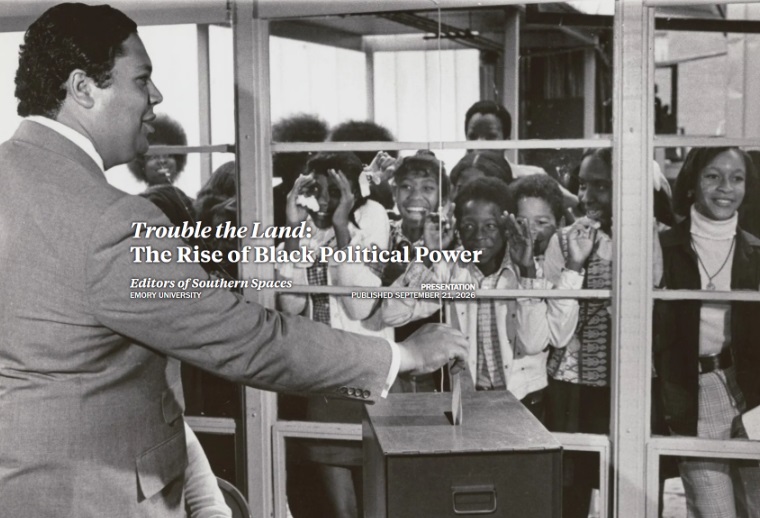
The Rise of Black Political Power traces Atlanta’s political transformation from the 1940s through the 1970s, as sustained voter registration and organizing shifted Black Atlantans from “being the balance of power to being the power.
The Atlanta University Center
While a Black population has always been present in Atlanta it has changed throughout time in both size and location.
From the afterlives of slavery, Reconstruction, Jim Crow, and Civil Rights, Black Atlantans still grapple with the everyday legacies of inequality, visualized in this project from the University of Richmond.
The Counter Narrative Project
The Counter Narrative Project is a Black, queer narrative change organization for Black LGBTQIIA+ journalism.
ATL Maps
A map of household economics, housing and community, education, and health or environment are featured. Each map shows racial and class differences in the metro-Atlanta area.
Historic Preservation Division, Georgia Department of Natural Resources
This article is an overview of Sweet Auburn’s evolution from a thriving African American business and cultural district to a historic neighborhood undergoing preservation and economic revitalization.
Adam Perry Newman
This article is a reflection on the “Still the Black Mecca?” Symposium with an accompanying interview from Kali-Ahset Amen, the Assistant Director of the James Weldon Johnson Institute at Emory University.